Florida has the clinical problems, the research centers and the missions. North America trails Europe on life-sciences quantum readiness, and the gap is institutional, so it can be closed.
Why Florida
The science is already here.
By the numbers
An operating economy.
No. 1
State for the economic impact of clinical trials
No. 2
State for pharmaceutical manufacturing
No. 2
State for medical device manufacturing
53%
Of Florida universities’ $3.5B in annual R&D is in the life sciences
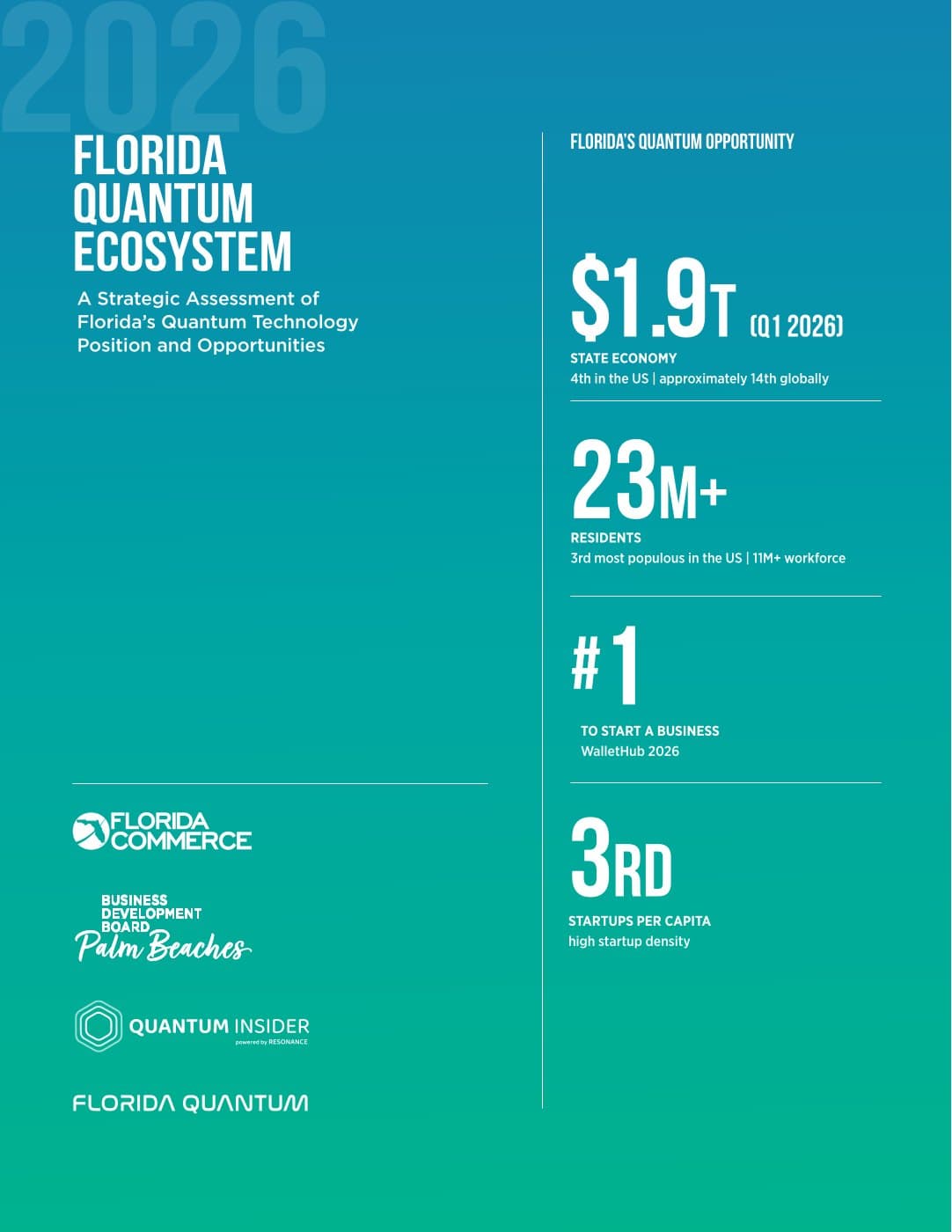
$1.9T
State economy, fourth in the US (Q1 2026)
21
Major military installations, including three combatant commands
7,500
People at Moffitt, Florida’s only NCI-designated Comprehensive Cancer Center
0
Public life-sciences programs linking Florida’s health systems to quantum hardware
Sources: Florida Quantum Ecosystem: A Strategic Assessment, 2026 edition; Moffitt and program count from The Biotech Opportunity in Quantum (2026).
The moment
Whoever owns the layer, owns the era.
In every technology buildout, the returns went to whoever owned the layer everything else ran on: railroads, telecom, cloud. The companies that built the substrate captured the value, and the ones that rented it competed on margin. Quantum will follow the same pattern.
Florida has been on the wrong side of this before. In 1981, IBM built the personal computer in Boca Raton, and for a decade South Florida held one of the deepest pools of computing talent in the country. Then the work moved. Almost none of the industry that followed was captured here.
In January 2026 a global quantum computing company moved its headquarters into that same Boca Raton building. UF Scripps and Max Planck Florida sit in the same county. Cleveland Clinic took five years to go from commitment to protein-scale results, starting on weaker hardware than exists today.
This time, Florida builds the ground.
Security
Security can’t wait for the roadmap.
Adversaries are collecting encrypted traffic today, expecting to decrypt it later. Florida hosts 21 major military installations, including three combatant commands, and the launchpad of America’s space economy, and its programs need capacity they can reach and trust.
Sovereign capacity, on a quantum-secure state network, minutes from the mission.
People
Talent that stays in Florida.
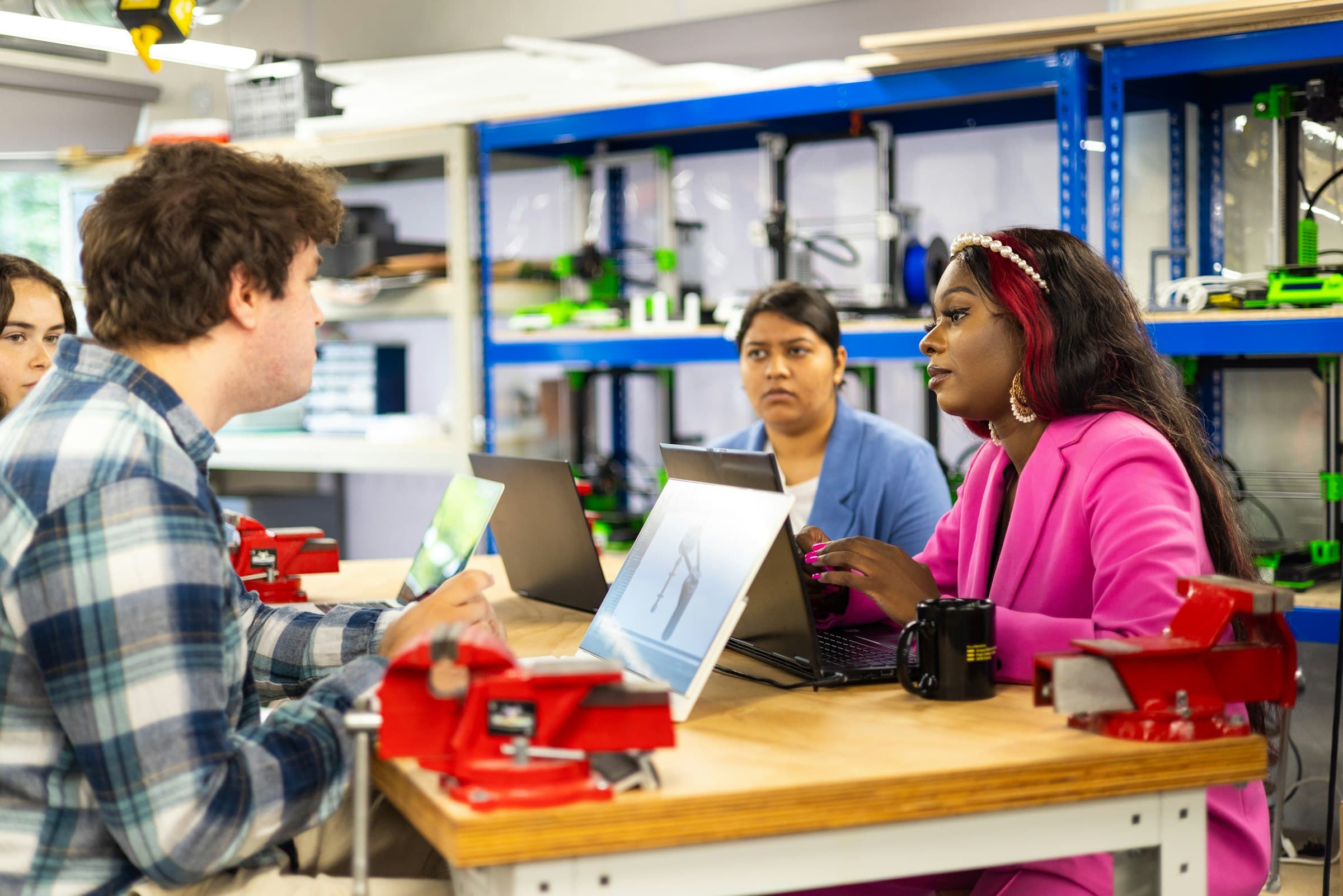
The industry’s loudest complaint is a shortage of people who can turn a clinical or industrial problem into a quantum one. At the center, scientists from resident companies work beside quantum engineers, and students from nearby universities train on the same systems.
Florida students shouldn’t have to leave Florida to work on the frontier.
Track record
Already in motion.
Florida Quantum Center is led by the team behind Quantum Coast Capital, a venture firm investing in quantum companies, working with the state’s commerce, education and network partners.
Placing
Florida’s first university-hosted quantum computer, in Boca Raton, deploying next year.
Building
The $7M Quantum Innovation Center at Palm Beach State College, a workforce center designed with employers at the table.
Contributed
To the state’s 2026 strategic assessment of Florida’s quantum economy.
Convening
Quantum Beach, the state’s flagship quantum gathering.
Report · 2026 edition
Florida Quantum Ecosystem.
The state’s strategic assessment of its quantum position and opportunities, from FloridaCommerce, the Business Development Board of the Palm Beaches, The Quantum Insider and FloridaQuantum. The Florida figures on this page come from it.
Read the report